When Fifth Third Bancorp announced on October 6, 2025 its planned $10.9 billion all-stock acquisition of Comerica (Reuters), dealmakers focused on shareholder value and market consolidation. But for CFOs and General Counsel, the real make-or-break is often hidden in plain sight: the change in control clause (CIC) in your management liability insurance—a single provision that can quietly create massive coverage gaps at the worst possible moment. (The transaction is expected to close in Q1 2026, pending customary approvals.)
Buried deep within your management liability insurance policies is a “Change-in-Control” (CIC) clause. It’s a standard provision, but in the context of an M&A transaction, it acts as a landmine, capable of creating massive, unforeseen coverage gaps at the worst possible moment.
This isn’t just about banking. Whether you are buying, selling, or merging, understanding this clause isn’t just an administrative task; it’s a critical component of deal hygiene.
The CIC Domino Effect: How One Event Triggers a Coverage Crisis
When a change in control clause is triggered—typically when an entity acquires more than 50% of your voting stock or assets—a rapid chain reaction ripples across your D&O, EPL, Cyber, and Fiduciary programs.
- The Trigger: The deal closes, meeting the policy’s CIC definition.
- The Flip: Your active policy converts to “run-off” It becomes non-cancellable, the premium is fully earned, and it only covers claims from wrongful acts before the transaction date.
- The Gap: Post-close actions are no longer covered by that policy. Instantly, you’ve got a future-liability gap.
Three Dangerous Assumptions That Expose Your Deal to Risk
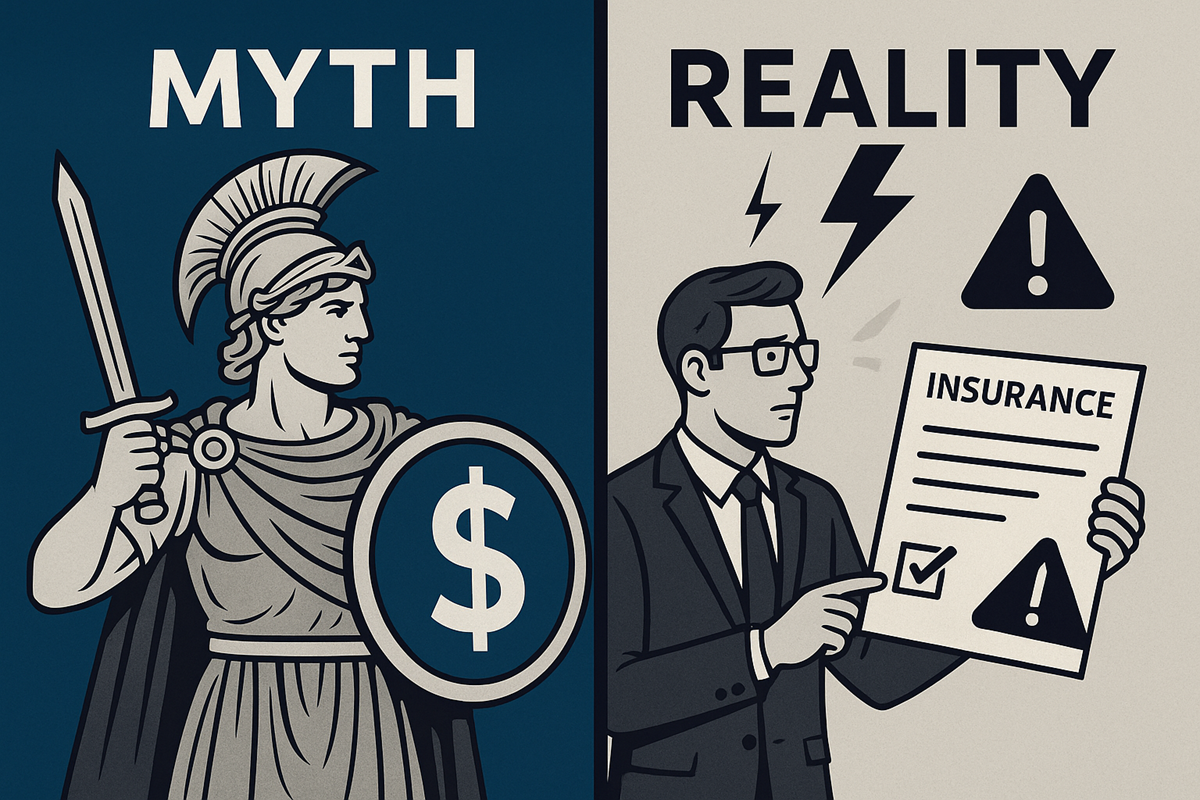
Many executive teams rely on myths that don’t survive contact with their change in control clause and related endorsements:
Myth #1: “This is just a D&O problem for the board.”
Reality: The CIC domino effect hits multiple policies. While a cornerstone of D&O, these provisions are also found in EPL and Fiduciary liability policies. They are increasingly critical in Cyber insurance, where many policies require notification—and sometimes additional premium—when acquiring a company that exceeds a size threshold (e.g., 15% of your revenues), creating a separate tripwire.
Myth #2: “We’ll just buy tail coverage after the deal closes.”
Reality: Waiting until the deal is signed is a strategic mistake. You lose all negotiating leverage. Insurers know you are required to buy an Extended Reporting Period (ERP or “tail” policy), and pricing can skyrocket. More importantly, missing the strict reporting deadlines in the original policy can void your right to purchase tail coverage at all.
Myth #3: “The buyer’s program will cover everything.”
Reality: Assuming the buyer’s policy will seamlessly pick up your company’s past liabilities is a recipe for disaster. Their policy may contain a “prior acts” exclusion for uninsured events, or their definition of a “wrongful act” may not align with your old policy. This creates dangerous “straddle” claim scenarios where a single issue spanning the deal date is covered by neither policy.
From Defense to Offense: An M&A Insurance Playbook Built Around the Change in Control Clause
A deal-ready insurance program is built long before a transaction is on the table. Sophisticated insureds and their brokers proactively manage these risks by negotiating key endorsements at renewal, when they have maximum leverage.
Key Endorsements & Levers That Materially Improve Outcomes:
- Pre-negotiated Tail (ERP) with “Discovery Applies”: Lock in the terms and pricing for a multi-year tail policy in advance (e.g., 250% of expiring premium for a 6-year tail). Critically, ensure the policy’s “discovery” provision—which allows for reporting circumstances that could lead to a claim—remains in effect during the ERP.
- Successor-in-Interest Endorsement: This is critical for the buyer. It explicitly grants the acquiring company rights under your run-off policy to seek reimbursement when indemnifying your former directors and officers, removing a key point of friction.
- Interrelated “Claw-Back” Language: This ensures that a series of related wrongful acts that span the pre- and post-close periods (a “straddle claim”) are pulled back into the run-off policy, preventing them from falling into a coverage black hole.
- Automatic Acquisition Coverage—Higher Thresholds: Negotiate higher thresholds for what your policies consider a “small” acquisition that is automatically covered, and clarify the notification window to avoid unintentional gaps.
- Bump-Up & Deal-Specific Exclusions Review: D&O policies contain M&A-related exclusions, like the “bump-up” exclusion, which can negate coverage for suits alleging the deal price was too low. The language varies wildly. Benchmarking and negotiating this wording at renewal is crucial.
Don’t Navigate M&A Blind. Use a Co-Pilot.
Executing this playbook takes market data and pattern-recognition. You need to know what best-in-class change in control clause language looks like—and how your entire program performs under stress.
That’s where PlausTech comes in. We’re an AI-first brokerage that turns insurance from deal-tax into deal-asset.
- CoverageXpert: Benchmarks your change in control clause, ERP, and M&A exclusions against thousands of policies—so you know exactly where you stand.
- CoverageLocator: Runs M&A simulations across your program to surface hidden risks—straddle-claim exposures, notification traps, and ERP pitfalls linked to your change in control clause—before they become nine-figure problems.
Is Your Program Deal-Ready? Get a Complimentary CIC Risk Assessment.
Protect your deal. Protect your leadership. Protect your future.
Contact PlausTech for a free, no-obligation analysis of the change in control clause and related provisions across your management liability suite. We’ll show you how to de-risk the close, preserve leverage, and turn coverage into competitive advantage.